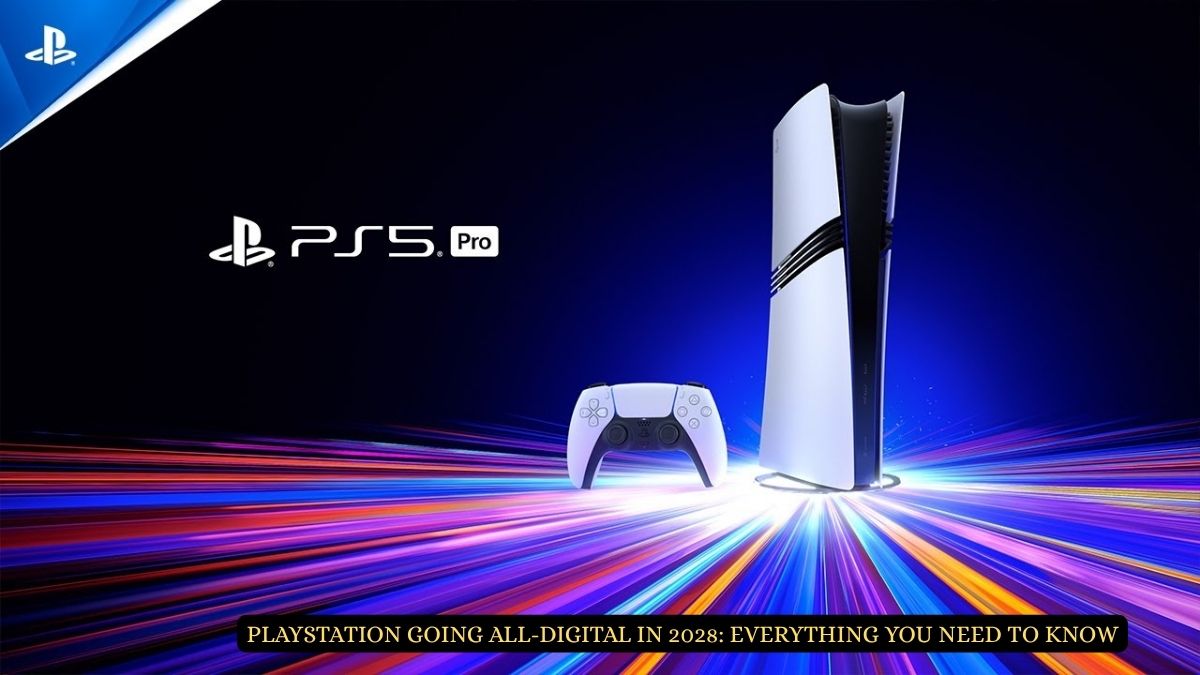
The era of opening a brand-new plastic case, feeling the tactile snap of the hub, and sliding a physical Blu-ray disc into a console is officially entering its final chapter.
In a monumental shift that will reshape the gaming industry forever, Sony Interactive Entertainment announced on July 1, 2026, that it will entirely discontinue physical game disc production for all new PlayStation titles starting in January 2028.
While the writing has been on the wall for years, the definitive deadline has sent shockwaves through the gaming community, triggering fierce debates over consumer rights, the economics of retail, and the future of game preservation.
The Fine Print: What is Actually Changing?
Sony’s announcement, penned by Sid Shuman, Senior Director of SIE Content Communications, details a strict cutoff date for new software, though it offers a few minor consolations for physical media purists:
The Cutoff: Every completely new game released on PlayStation hardware after January 2028 will exist solely as a digital license.
The Back Catalog: Physical discs released before January 2028 will remain entirely unaffected. Games already out on disc can still be played, and publishers will even be allowed to place re-orders for existing physical stock after the deadline.
The “Empty Box” Compromise: Brick-and-mortar retailers will not lose PlayStation products entirely. Sony has confirmed that physical retail spaces will still sell boxed copies of new games—but instead of a disc, those boxes will merely contain a digital download code.
🚨 Sony is stopping production of PlayStation game discs for new games from Jan 2028 onwards
Games released after this will be available directly through the PS Store or indirectly at retail in the form of download codes (see GTA VI for example)
This is a watershed moment for… pic.twitter.com/3dm82SHb0l
— Piers Harding-Rolls (@PiersHR) July 1, 2026
Why Sony is Forcing the Shift
From a purely data-driven perspective, Sony views this as an inevitable, natural progression. According to data from Ampere analysis, digital downloads accounted for nearly 80% of Sony’s full-game sales in 2025—a staggering rise from a meager 13% when the PlayStation 4 launched back in 2013.
Furthermore, major industry players had already begun paving the way. Just days before Sony’s bombshell, Rockstar Games confirmed that physical editions of the highly anticipated Grand Theft Auto VI would ship with a download code rather than a physical disc. What initially looked like a standalone publisher decision now reads like tactical preparation for platform-wide mandates.
The financial incentives for Sony and game publishers are massive:
Eliminating Overhead: No more manufacturing millions of Blu-ray discs, printing cover art, buying plastic cases, or managing heavy shipping logistics.
Higher Profit Margins: Without physical distribution costs and retail cuts, digital sales yield higher profit margins per unit.
Total Control over Pricing: Funneling consumers directly into the native PlayStation Store allows Sony to mitigate third-party price-slashing and completely cut out the used game market.
The Gamer Backlash: Control, Cost, and Preservation
Unsurprisingly, the community response on the PlayStation Blog and social media has been overwhelmingly negative. For many, the move represents a corporate overreach that actively strips away consumer rights.
The Power of Ownership: When you buy a physical disc, you buy a tangible asset that you can lend to a friend, gift to a family member, or resell to offset the cost of your next purchase. A digital license offers none of these flexibilities.
The timing of the announcement added fuel to the fire. Sony paired the news of the 2028 disc phase-out with an update that they are officially closing down the digital storefronts for the PlayStation 3 and PlayStation Vita. Critics pointed out the cruel irony: Sony is pushing gamers into a digital-only ecosystem while simultaneously demonstrating that digital storefronts eventually expire, rendering old digital libraries inaccessible.
Furthermore, in price-sensitive markets like India and parts of Latin America, a thriving pre-owned game market is the only way many players can afford a hobby where standard flagship games are creeping toward an $80 MSRP. Without a second-hand market to alleviate those costs, gaming risks becoming a luxury many will be priced out of.
Signposts for the PlayStation 6
The January 2028 timeline tells us plenty about the future of PlayStation hardware. Analysts point out that console generations typically span roughly seven to eight years. With the PlayStation 5 launching in late 2020, the 2028 deadline aligns perfectly with the projected arrival of the PlayStation 6.
Industry insiders, including Daniel Ahmad, Director of Research and Insights at Niko Partners, suggest this announcement practically guarantees the PS6 will launch as a digital-only console line, entirely discarding internal disc drives.
While the industry will spend the next year and a half adjusting to the transition, one thing is certain: the countdown clock on physical console gaming has officially started ticking.