The student movement led by the Cockroach Janta Party (CJP) has escalated into one of the largest youth-driven political protests in India. What began as a satirical digital movement in May 2026 has quickly transformed into an intense ground agitation at New Delhi’s Jantar Mantar, centering on systemic exam leaks and educational accountability.
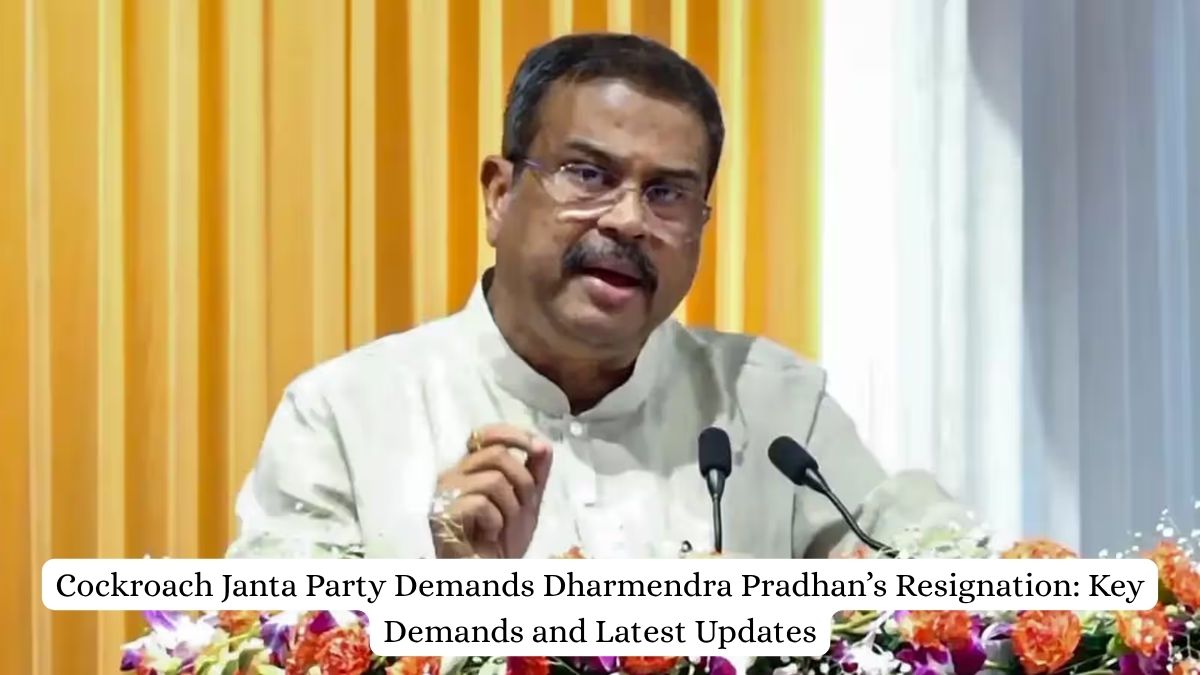
At the core of the CJP’s agitation is an unwavering, “non-negotiable” demand for the immediate resignation or dismissal of Union Education Minister Dharmendra Pradhan.
Why Is the Cockroach Janta Party Demanding the Education Minister’s Resignation?
Following widespread outrage over alleged paper leaks and irregularities in competitive examinations such as the NEET-UG, youth activists and student groups mobilized across the country.
The CJP, led by founder Abhijeet Dipke alongside spokespersons Saurav Das and Ashutosh Ranka, argues that the persistent failure to maintain the integrity of national entrance tests represents a breakdown in educational governance.
During high-stakes discussions with Union Ministers, the delegation made it clear that accountability at the top is essential to restoring public faith in the national examination machinery.
“Our first demand, which is non-negotiable, is that either Dharmendra Pradhan should resign or the government should dismiss him from the Cabinet.”
— Cockroach Janta Party Delegation Statement
Important. https://t.co/NREvC3FEqZ
— Saurav Das (@SauravDassss) July 24, 2026
Key Demands of the Cockroach Janta Party
While the resignation of Dharmendra Pradhan remains the headline condition, the CJP’s charter of demands addresses both victim compensation and policy reform:
Ouster of Education Minister: Immediate resignation or cabinet removal of Dharmendra Pradhan.
Financial Compensation: ₹1 crore compensation for the families of affected students who died by suicide amid the exam turmoil.
Withdrawal of Police Cases: Dropping all FIRs and legal charges filed against peaceful student protesters during recent demonstrations, including the July 20 Parliament march.
Structural Exam Reforms: Standardized measures, fast-track anti-leak legislation, and transparent protocols for conducting national entrance exams.
Government Response and High-Level Talks
The government has stepped up efforts to address the widespread youth unrest. High-level meetings involving senior cabinet ministers, including Union Health Minister J.P. Nadda and Minister of State Jitendra Singh, have been convened to engage with CJP leadership.
| Area of Negotiation | Status / Action Taken |
| Resignation Demand | Pending government position; Ministers requested time to deliberate. |
| FIR Withdrawals & Compensation | Expressed “in-principle approval” to review student cases and compensation. |
| Anti-Paper Leak Legislation | Union Cabinet approved stricter legislation proposing up to 10 years’ imprisonment and heavy fines. |
| Fast-Track Courts | Announcement of special fast-track courts dedicated to resolving exam leak cases. |
What Is the Cockroach Janta Party (CJP)?
The Cockroach Janta Party emerged on social media as a satirical movement mocking public remarks directed at youth activists and unemployed job-seekers. Adopting the humble cockroach as a symbol of resilience, the movement gained millions of followers across social platforms practically overnight.
By tapping into Gen-Z frustration surrounding high competition, unemployment, and exam insecurity, the CJP evolved from viral internet satire into a formidable political force organizing ground protests across India.
What Comes Next?
With CJP leaders maintaining that Dharmendra Pradhan’s departure is essential to any long-term resolution, all eyes remain on the Union Cabinet and Parliament. Whether through legislative fast-tracking or executive re-shuffling, the movement has placed youth issues and exam security at the absolute center of national political debate.
About the Author