
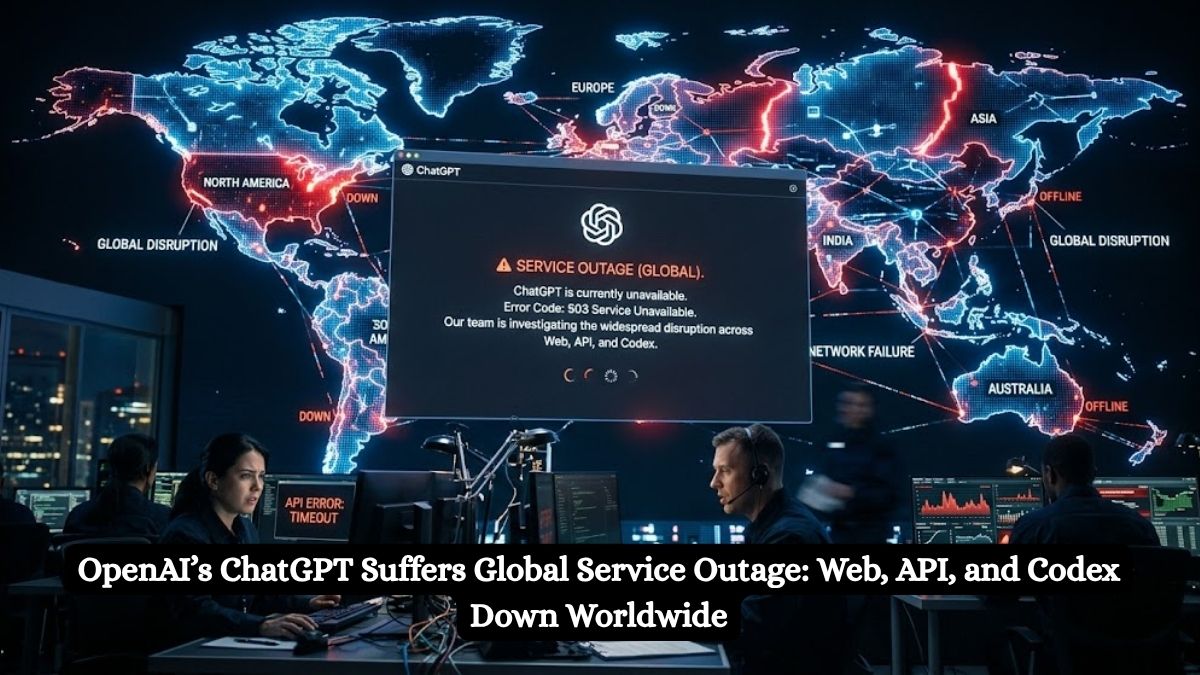
San Francisco, CA — Artificial intelligence giant OpenAI experienced a widespread global service disruption that temporarily knocked offline its core suite of products, including the popular ChatGPT web interface, mobile application, developer API endpoints, and the Codex coding assistant.
The outage, tracked by millions of users globally, triggered a surge of complaints on social monitoring platforms and raised fresh concerns regarding the infrastructure stability of critical AI applications.
What Happened? Key Details of the ChatGPT Outage
The disruption began early in the day, with user reports spiking across global monitoring tools like Downdetector. Users in North America, Europe, India, Japan, and Australia simultaneously reported connection failures and authentication drops.
       [ Client Request ]
               │
               ▼
   ❌  Authentication / Routing Layer  (Shared Infrastructure Failure)
               │
   ┌───────────┼───────────┐
   ▼           ▼           ▼
ChatGPT     OpenAI API   Codex
 (Web/App)  (Endpoints) (Coding)
Affected Services & Features
ChatGPT Web & Mobile Apps: Users were met with infinite loading screens, missing conversation histories, and sign-in drops.
Developer API Endpoints: Third-party applications, enterprise integrations, and custom AI bots relying on OpenAI’s models returned timeout errors or failed calls.
Codex Services: Automated coding suggestions and assistant features inside developer workflows were temporarily unresponsive.
Concurrency Errors: Active users received persistent error messages stating
"Too many concurrent requests"or"Service Unavailable".
OpenAI’s Response & Mitigation Effort
OpenAI quickly updated its official status dashboard (status.openai.com), acknowledging elevated error rates across multiple components:
“We are investigating the issue for the listed services.” — OpenAI Official Incident Update
Shortly after initiating an investigation, engineers applied mitigation patches. The issue was traced to shared backend components—likely within the authentication or routing layer—rather than a single isolated product interface.
Recovery was monitored closely over the following hour as systems gradually returned to normal operational levels.
Impact Breakdown: Why This Outage Hits Hard
While a temporary chatbot outage is inconvenient for general consumers, downtime across OpenAI’s API creates a massive ripple effect across the modern tech ecosystem:
| Stakeholder Category | Operational Impact |
| Enterprise & Startups | Customer-facing SaaS tools, customer support bots, and automated workflows fail downstream. |
| Software Developers | IDE completions via Codex stall, impacting software development velocity. |
| Everyday Users | Inability to access saved prompt history or initiate new chat sessions. |
Because thousands of software tools plug directly into OpenAI’s endpoints, an infrastructure stumble at OpenAI effectively creates a mini-outage across hundreds of secondary businesses worldwide.
How to Check if ChatGPT is Down Near You
If you encounter errors while using ChatGPT, follow these steps to verify system status:
Check the Official Status Page: Visit status.openai.com to see real-time component health for ChatGPT, APIs, and Codex.
Monitor Downdetector: Look up
ChatGPTon Downdetector to view live outage reports submitted by users in your geographic region.Inspect Social Channels: Check the official
#ChatGPTDownhashtag on social platforms like X (formerly Twitter) for updates from other users and developers.Clear Browser Cache / Re-login: Occasionally, authentication tokens fail to refresh immediately after service restoration. Clearing site cookies or re-logging into your account can resolve localized caching issues.
About the Author