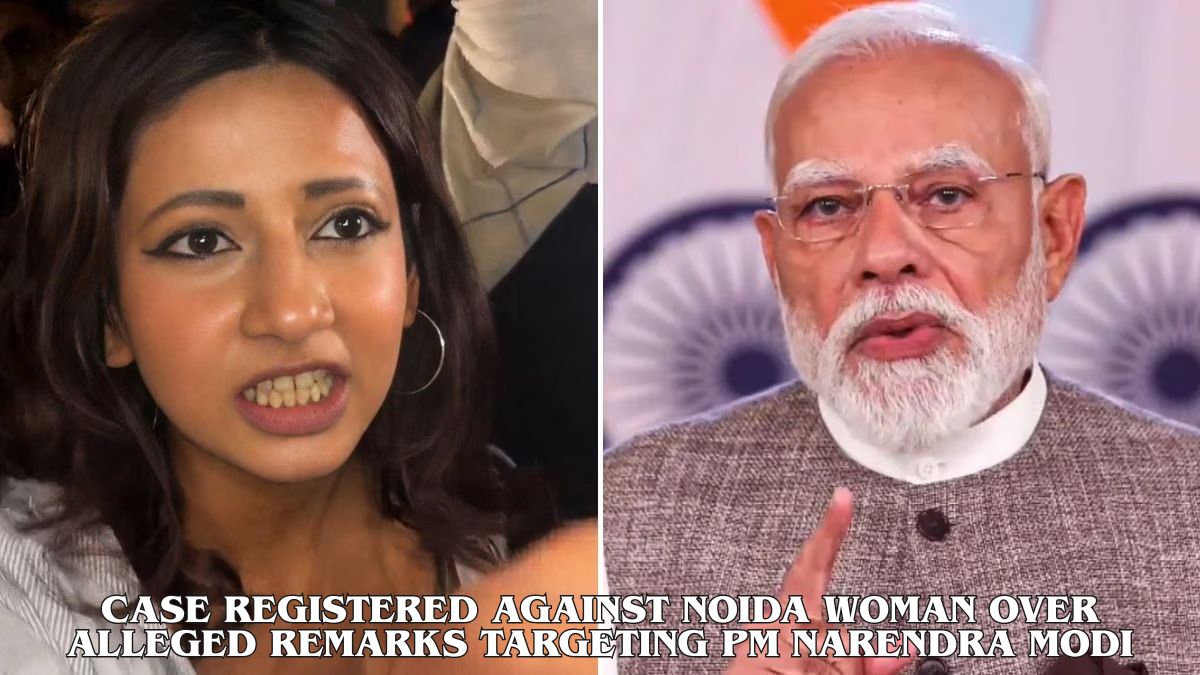
In a legal controversy sparked by viral protest footage, the Noida Police registered a Zero FIR against 25-year-old Ruchika Singh following allegations of abusive language directed at Prime Minister Narendra Modi.
The case—filed by a Supreme Court advocate—has ignited a nationwide debate surrounding freedom of speech, online profanity, and the legal limits of public political protest in India.
Overview of the Incident
The charges stem from a protest organized at New Delhi’s Jantar Mantar on July 23, 2026. Video clips circulating across social media showed Singh using objectionable and vulgar expressions during public commentary directed at PM Modi.
On July 29, 2026, advocate Smriti Singh lodged a formal complaint at the Expressway Police Station in Noida, Uttar Pradesh, contending that the remarks undermined the dignity of a constitutional office and were intended to disturb public order.
Legal Charges Under Bharatiya Nyaya Sanhita (BNS)
Because the event occurred in New Delhi while the complaint was received in Noida, local authorities filed a Zero FIR before transferring the investigation to the Delhi Police at Parliament Street.
The FIR invokes three specific provisions of the Bharatiya Nyaya Sanhita (BNS):
| Section | Offence | Maximum Penalty |
| Section 352 BNS | Intentional insult to provoke a breach of peace | Up to 2 years imprisonment or fine |
| Section 353(1) BNS | Statements conducing to public mischief | Up to 3 years imprisonment or fine |
| Section 356(1) BNS | Defamation | Up to 2 years simple imprisonment or fine |
Key Legal Debates: Is Profanity a Crime Under Indian Law?
The registration of criminal charges for political profanity has brought legal scholars and free-speech advocates into active debate.
The Standard for Obscenity vs. Vulgarity
Under established Supreme Court precedents (such as Aveek Sarkar v. State of West Bengal), Indian courts have consistently differentiated between obscenity and vulgarity or profanity:
Obscenity: Requires a finding that material excites lustful thoughts or appeals predominantly to prurient interest (the “community standards” test).
Vulgarity / Crude Expletives: Judicial rulings—including High Court judgments—have held that crude profanity or abusive language born out of anger or frustration does not automatically meet the statutory test for obscenity or public mischief unless there is a direct threat to public order.
Public Mischief & Breach of Peace
To sustain charges under Section 352 and Section 353(1) of the BNS, investigators must demonstrate a direct nexus between the uttered remarks and an actual risk of inciting violence, community enmity, or widespread public chaos.
Also read: PM Modi’s ‘Thank You Friends’ Reel Hits 303 Million Views Amid CJP Protests
Reactions from Legal Experts & Political Figures
“The language may be wrong, and it may be objectionable to someone, but that is no reason to invoke the criminal justice machinery against such people. It creates a chilling effect. I don’t think this is acceptable to anybody, especially the younger generation”
— Saurav Das, Political Spokesperson
VIDEO | Delhi: Reacting to the use of derogatory remarks by CJP protesters, party spokesperson Saurav Das says, “If any language used was derogatory in nature, then the person concerned is free to pursue civil and criminal defamation proceedings against the individual concerned.… pic.twitter.com/N7hWEmXkn4
— Press Trust of India (@PTI_News) July 30, 2026
- Complainant’s Perspective: Smriti Singh stated that using abusive language against a sitting Prime Minister on public platforms hurts the dignity of constitutional offices and sets a harmful precedent for online discourse.
- Defense & Protester Stance: Rights advocates and opposition commentators argued that while crude speech should be discouraged, invoking severe criminal provisions against a citizen over heated protest dialogue risks overreaching into protected political speech.
Current Status of the Investigation
- Jurisdiction Handover: Noida Police completed the initial procedure and transferred the case files to the Delhi Police (Parliament Street division).
- Police Verification: Authorities are verifying the timeline and context of the viral videos filmed at Jantar Mantar.
- Public Apology Video: Following the legal action, an apology video was shared online, with the individual expressing remorse over the statements made during the protest.
FAQs on BNS & FIR Procedure in India
What is a Zero FIR?
A Zero FIR allows any police station in India to register a First Information Report regardless of where the crime took place. It is given the number “0” and promptly transferred to the police station with territorial jurisdiction over the incident location.
Can abusive language alone lead to arrest in India?
Mere vulgarity or profanity does not usually constitute a cognizable offense unless it qualifies as criminal defamation, directly incites public disorder, or violates specific statutory prohibitions regarding obscenity or hate speech.
About the Author